
🌐 Read this article in other languages:
ગુજરાતી: ટેસ્ટોસ્ટેરોન ઓછું છે? લક્ષણો, તપાસ, જીવનશૈલી અને આયુર્વેદિક સમજ
हिंदी: टेस्टोस्टेरोन कम है? लक्षण, जांच, जीवनशैली और आयुर्वेदिक समझ
“Doctor, I just don’t feel like doing anything. I come home from the office and lie on the sofa. My belly keeps growing and my desire keeps falling.” Many men around 40 come with this complaint. After reading on the internet, some buy a “testosterone booster” straight away. But not every tiredness is due to testosterone, and not every low report needs hormone injections.
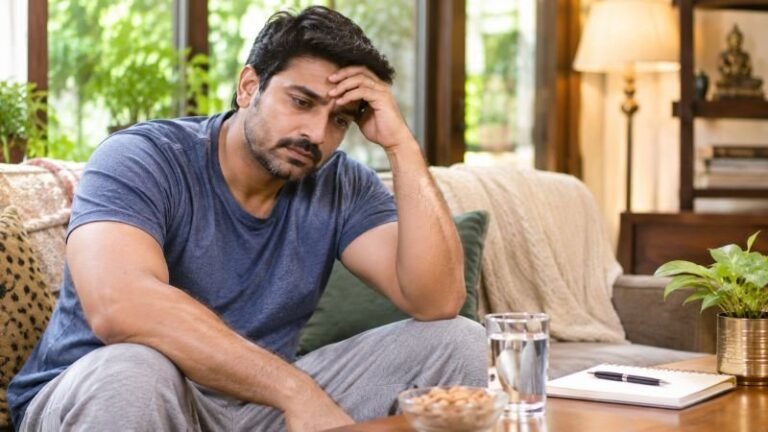
Testosterone is the main male sex hormone, made mostly in the testes. It affects desire, erection, sperm production, muscles, bones, blood formation, energy and mood. Low testosterone (hypogonadism / Low T) is considered present when properly done tests show a consistently low level and there are related symptoms.
In this article we will see which symptoms need attention, when and how to get tested, how big a difference lifestyle can make, and how Ayurveda understands this condition.
Key Takeaways
- Test between 7 and 11 a.m., and if low, repeat it once more.
- Obesity, lack of sleep, diabetes and stress are common causes of low testosterone.
- Hormone treatment only for proven deficiency, under specialist supervision; special caution if planning a child.
- Ayurveda emphasises improving the body’s own capacity through nourishment of Ojas, Agni and Shukra Dhatu.
Symptoms
Sexual Symptoms
- Reduced desire.
- Fewer or no natural morning erections.
- Erection difficulty, less semen.
Physical Symptoms
- Constant tiredness, lack of energy.
- Increasing belly fat, decreasing muscle.
- Slower growth of beard and body hair.
- Breast swelling or tenderness.
- Weak bones, repeated fractures (in the long term).
- Mild hot flushes, sweating.
Psychological Symptoms
- Sadness, irritability, lack of enthusiasm.
- Feeling of reduced concentration and memory.
These symptoms can also occur with thyroid problems, depression, sleep disorders or anaemia. So do not decide based on symptoms alone.
Causes
Modern View
- Obesity: in fat tissue, testosterone converts to oestrogen; belly fat is especially risky.
- Diabetes and insulin resistance.
- Sleep: testosterone is mostly made during sleep; too little sleep and sleep apnoea affect it.
- Long-term stress: the stress hormone cortisol works against testosterone.
- Age: a slow decline each year after 40 is natural.
- Medicines: long-term steroids, opioid class painkillers, externally taken hormones.
- Testicular causes: injury, effects of mumps, some genetic conditions.
- Pituitary gland: raised prolactin, a gland tumour (less common).
- Alcohol and smoking.
Ayurvedic View
Ayurveda has no word for hormones, but their functions can be explained through Ojas, Shukra Dhatu and Agni. When Ojas is depleted, tiredness, lack of enthusiasm, fear and loss of the body’s radiance occur. When Kapha and Meda increase, the channels get blocked, and when Vata increases, the body wastes. Charaka Samhita also describes “Jarajanya Klaibya” (decline with age), in which Rasayana treatment is important.
Ayurvedic Understanding
The aim of Ayurvedic treatment is not to supply hormones from outside, but to improve the body’s own capacity. It has three levels: first, reducing Meda and Kapha (exercise, diet, Udvartana); second, improving Agni, so the Dhatus are nourished; and third, strengthening Ojas and Shukra Dhatu through Rasayana-Vajikarana. Along with this, Achara Rasayana, that is truthfulness, calm, self-restraint and positive conduct, is also described as important for the energy of the mind.
Psychological Understanding
In middle age, many men get caught in the triangle of work, family and health. Seeing changes in their energy and appearance, a feeling comes: “I am no longer what I used to be.” This feeling increases sadness and irritability, which in turn affect sleep and hormones. Some people call this “male menopause”, but it is not a sudden change like menopause in women; it is a slow change, largely influenced by lifestyle.
The good news is that healthy habits started in middle age also make a big difference. Many men who start exercising at 45 or 50 say they feel more energetic than they did at 35. Removing the thought “it’s too late now” from the mind is the first step.
Testosterone and Heart and Bone Health
Testosterone is not limited to sexual life. If it stays very low for a long time, the risk of thinning bones (osteoporosis), muscle loss, anaemia and metabolic problems can increase. On the other hand, taking excess hormone on your own can thicken the blood and increase the risk of clots. So balance is what matters, not “the more the better.”
How to Test Correctly
- Timing: between 7 and 11 a.m., because testosterone is highest in the morning.
- Repeat: if low, test again after a few weeks. Do not test right after fever, illness or a sleepless night.
- Accompanying tests: LH, FSH, prolactin, thyroid, sugar, lipids, haemoglobin; SHBG and free testosterone if needed.
- Others: weight, waist size, blood pressure, a sleep study if there is snoring.
Often a “borderline” report becomes normal just with weight loss and better sleep.
Treatment / Management
- Lifestyle: weight, sleep, exercise, stress, addictions: the first and most important step.
- Root cause: diabetes, thyroid, prolactin, review of medicines.
- Ayurveda: Meda-Kapha reduction, Agni Deepana, Rasayana-Vajikarana.
- Counselling: for mood, relationship and midlife stress.
Modern Treatment, Explained
When deficiency is proven on two tests and symptoms are present, an endocrinologist or urologist may consider testosterone replacement therapy (gel, injections and so on). This requires regular monitoring of haemoglobin, prostate and lipids. Important: externally given testosterone can reduce the body’s sperm production, so for men planning a child, doctors consider a different class of medicines. If prolactin is high, its cause is treated specifically. Never take medicines sold as “boosters” or injections available at gyms on your own.
Annual Health Checklist for Men After 40
- Weight, waist size and blood pressure.
- Sugar (HbA1c), lipid profile, thyroid.
- Haemoglobin, vitamin D and B12.
- Morning testosterone if there are symptoms.
- Prostate check after 50 or if there are urinary problems, as your doctor advises.
- A sleep assessment if there is snoring or daytime sleepiness.
The purpose of this checklist is not to frighten, but timely caution. Often in men who come worried about testosterone, diabetes, high cholesterol or sleep problems are detected for the first time, and timely treatment of these brings great benefit in the long run.
Common Myths
- “Raise testosterone and everything will be fine.” Fact: tiredness and low desire have many causes.
- “More testosterone means more manliness.” Fact: excess hormone can cause thickened blood, acne, anger and infertility.
- “One low test means medicine for life.” Fact: in many cases, lifestyle brings improvement.
The Partner’s Role
When a husband seems tired, irritable and distant, the wife may feel the relationship has gone cold. Often the cause is physical. When the wife goes walking with him, builds healthy food habits at home, and supports the habit of sleeping on time instead of late-night TV or mobile, change becomes easier for the husband. Improving health together instead of criticising can also become an opportunity for the couple to build a new bond.
Ayurvedic Herbs
Dosage and choice should be decided by a Vaidya after examination.
- Ashwagandha: reduces stress, strengthening, Rasayana.
- Kaunch Beej: Vajikara, Shukrala.
- Shilajit (purified): Rasayana, for energy; only from a reliable source.
- Gokshura: for the urinary and reproductive system.
- Safed Musli: Vrishya, strengthening.
- Guggulu based formulations, Triphala: when Meda and Kapha are high (on a Vaidya’s advice).
Diet
- Protein: dal, legumes, paneer, curd, eggs (if you eat them).
- Zinc and magnesium: pumpkin seeds, sesame, almonds, green leafy vegetables.
- Good fats in moderation: ghee, walnuts, flaxseed.
- Vitamin D: sunlight; supplements on a doctor’s advice if needed.
- Avoid: sugar, refined flour, packaged food, sweet drinks, alcohol.
Lifestyle
- 7 to 8 hours of deep sleep; get checked if you snore.
- Strength training 2 to 3 days a week and brisk walking 3 days.
- Reduce belly fat: try to keep waist size below 90 cm.
- Stress management: meditation, hobbies, friends.
- Stop smoking, avoid alcohol.
Panchakarma
If Meda and Kapha are high, Udvartana (dry herbal powder massage) and Virechana (purgation); if there is Vata depletion, Abhyanga (oil massage) and Basti (medicated enema). After purification, Rasayana treatment. Panchakarma is not mandatory for everyone.
Yoga and Pranayama
- Surya Namaskar (sun salutation), Virabhadrasana (warrior pose), Dhanurasana (bow pose).
- Sarvangasana (shoulder stand), under guidance.
- Kapalbhati (skull shining breath) for excess fat; with advice if you have heart disease or high BP.
- Bhramari and meditation: reduce stress.
Precautions
- No testosterone, “boosters” or gym injections without a doctor’s advice.
- Regular blood and prostate tests if on hormone treatment.
- Do not stop ongoing medicines without your doctor’s advice.
- Substances like Shilajit only in purified and certified form.
- Results differ from person to person.
References
- Charaka Samhita, Chikitsa Sthana 1 (Rasayana) and 2 (Vajikarana).
- Charaka Samhita, Sutra Sthana 17 and 30 (Ojas).
- Ashtanga Hridaya, Uttara Tantra 39 (Rasayana) and 40 (Vajikarana).
Do’s and Don’ts
Do: test in the morning, confirm with a repeat, work on weight and sleep, do strength exercise, seek expert advice.
Don’t: take online boosters or gym injections, decide on one report, take hormones while hiding plans for a child.
Counselling
For men in middle age, counselling often becomes an opportunity to reset life’s priorities: work, health, relationship and time for oneself. In a couple session, both partners’ expectations become clear. Everything you share is kept completely confidential.
Case Studies
Case 1: Weight and Sleep
A bank officer in his forties weighed 95 kg, snored at night and felt sleepy during the day. His desire was low and tiredness high. Testosterone came borderline low on two tests. A sleep study found sleep apnoea, and treatment was started. Along with this came dietary changes, daily walking, strength exercise two days a week and, under a Vaidya’s supervision, Meda reduction and Rasayana treatment. In six months he lost 10 kg, his sleep improved and on the repeat report testosterone was within the normal range. Hormone medicine was not needed. His wife also changed the food at home, stopped sweets at night, and the two began walking together in the evenings. He said that as his tiredness reduced, irritability at home also decreased and his enthusiasm to spend time with the children returned.
Case 2: The Online Booster
A young man in his thirties started taking an online “testosterone booster” for tiredness. Within a few months, acne, anger and palpitations increased. Tests showed raised haemoglobin and changes in liver tests. The product was stopped, and physician supervision and Ayurvedic support for digestion and liver were given. His original tiredness was due not to anaemia but to vitamin D and B12 deficiency and irregular sleep, and correcting these brought his energy back. He said the advertisement had said “100% natural”, so he had no idea of the risk. Since this experience, he never forgets to ask a doctor before taking any supplement.
Case 3: Prolactin
A man in his late thirties had low desire along with headaches. Tests showed low testosterone and high prolactin. When referred to an endocrinologist, a small pituitary tumour was found and treated with medicine. Ayurvedic treatment ran alongside as support. This case shows that proper tests can sometimes catch a hidden but important cause. Had he simply taken a “strength medicine”, the tumour could have gone unnoticed for years. After treatment his headaches reduced, and within a few months both desire and energy improved.
When to See a Doctor / Sexologist
- Low desire, no morning erections and tiredness for more than three months.
- Breast swelling, reduced beard, testes seeming smaller.
- Headache with changes in vision.
- Problems after taking gym supplements or hormones.
- These symptoms along with not being able to have a child.
About Dr. Nikul Patel
Dr. Nikul Patel (BAMS) is an Ayurvedic physician at LifeCare Ayurveda and has been practising since 1999, that is, for 27 years. When low testosterone is suspected, he guides through correct understanding of symptoms and reports, lifestyle improvement, coordination with an endocrinologist when needed and Rasayana-Vajikarana based Ayurvedic treatment.
FAQs
When should I get a testosterone test?
Between 7 and 11 a.m., when you are well; if low, get it confirmed again.
Does losing weight raise testosterone?
In obese men, often yes; reducing belly fat makes a particular difference.
Can hormone treatment cause infertility?
Externally given testosterone can reduce sperm production; if planning a child, be sure to tell your doctor.
Does Ashwagandha raise testosterone?
Some studies suggest benefit, but it is not the same for everyone; take it on a Vaidya’s advice.
Can the decline with age be prevented?
The natural decline can be slowed: through exercise, sleep, weight and stress control.
People Also Ask
What is a normal testosterone level?
Ranges differ between labs; understand the report with your doctor in the context of symptoms.
Does sleep affect testosterone?
Yes, too little sleep and sleep apnoea can lower the level.
Does soy lower testosterone?
Soy in normal amounts is not harmful; it is better to avoid very large amounts.
Conclusion
Testosterone is an important pillar of men’s health, but it is not solely responsible for tiredness or low desire. Proper testing, work on weight, sleep and stress, hormone treatment under specialist supervision only when needed, and Ayurvedic Ojas-Rasayana care, this balanced path is the safest in the long run. Results may differ from person to person.
Dr. Nikul Patel (B.A.M.S.)
307, 3rd Floor, Shalin Complex, Above Farki Lassi, Krishnabag Char Rasta, Maninagar, Ahmedabad – 380008
Timing: 10:00 AM to 1:00 PM and 3:00 PM to 6:30 PM | Saturday–Sunday: Closed
📍 Clinic Location — Google Maps
