
🌐 Read this article in other languages:
ગુજરાતી: લગ્નનો થાક અને તણાવ: દાંપત્ય જીવનની શરૂઆત પર અસર અને આયુર્વેદિક ઉપાય
हिंदी: शादी की थकान और तनाव: वैवाहिक जीवन की शुरुआत पर असर और आयुर्वेदिक उपाय
An Indian wedding is not a one-day event. The months from engagement to wedding bring shopping, planning, expenses, family disagreements, guests, countless rituals, sleepless nights, heavy meals and constant running around. By the time the wedding day arrives, both bride and groom are exhausted physically and mentally. Then they are expected to step immediately into a new life with enthusiasm, energy and romance.
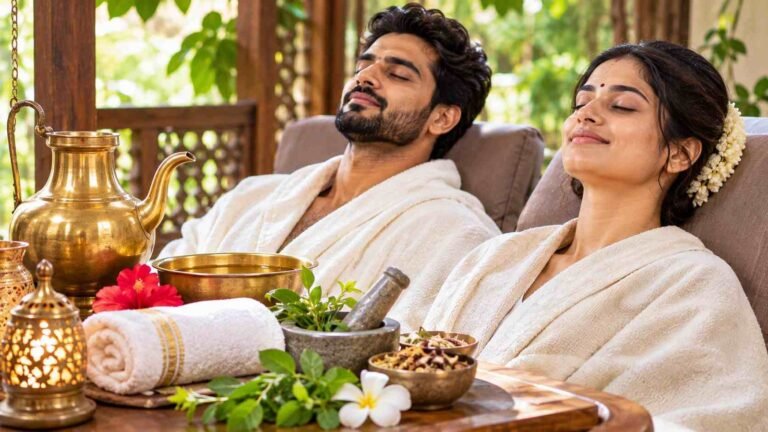
Wedding fatigue is the exhaustion that comes from long physical exertion, sleepless nights, irregular meals and mental pressure before and during the wedding, which can affect a newly married couple’s sleep, digestion, mood and marital desire. Understanding it and allowing proper rest is essential for a healthy start to a new life.
Key Takeaways
- After the wedding, fatigue, irritability, low desire or difficulty with intimacy are often the result of exhaustion.
- According to Ayurveda, sleepless nights, travel and irregular meals increase Vata and Pitta.
- Rest, light food, oil massage and sleep are the simplest and most effective remedies.
- Without haste or pressure, closeness gradually becomes natural.
How Does Wedding Fatigue Show Up?
- Constant tiredness, body aches, especially in the legs and back
- Inability to sleep, or no freshness even after sleeping
- Indigestion, gas, constipation or acidity
- Irritability, crying or anger over small things
- Headache
- Low interest in intimacy, or difficulty with erection/arousal during intimacy
- Changes in the menstrual cycle in women
- Frequent minor infections such as colds and coughs
Causes
Modern Perspective
- Lack of sleep: Music evenings, night rituals, guests till late.
- Irregular and heavy meals: Sweets, fried food, late feasts.
- Mental stress: Expenses, planning, family disagreements, worry about the new home.
- Emotional ups and downs: For the bride, farewell to her parents; for the groom, new responsibility.
- Travel: Honeymoon or visits to relatives right after the wedding.
- Drinking too little water: Forgotten in the busyness.
Ayurvedic Perspective
- Staying up at night: The classical teachers say staying awake at night increases dryness (Rukshata) and Vata.
- Vishamashana (eating at irregular times) and Adhyashana (eating again before the previous meal is digested): Agni is disturbed and Ama forms.
- Overexertion: Tissue depletion and Ojas depletion.
- Worry and grief: Affect Vata and the mind; including the grief of farewell.
- Pitta increase: Hot, spicy food, anger, the heat of summer weddings.
Ayurvedic Understanding
Ayurveda describes three Upastambha (supporting pillars) of health: food, sleep and Brahmacharya (balanced marital life). During wedding days, food and sleep are both disturbed. As a result the third pillar, healthy marital life, also weakens. So the first task after the wedding is to rebalance food and sleep.
Ayurveda describes both fatigue from exertion (Shrama) and Klama (fatigue without exertion, mental fatigue). For Shrama, rest, nourishing food and Abhyanga help; for Klama, a happy mind, good sleep and light activity help.
The classical teachers clearly said to avoid marital intimacy when tired, hungry, full or worried. So not rushing intimacy during post-wedding fatigue is also right from the Ayurvedic point of view.
Psychological Understanding
A wedding is a joyful occasion, but it is also a big change for the mind. For the bride, a new home, new people, a new role; for the groom, new responsibility and balancing family and wife. These changes bring worry, sadness and fatigue along with joy. Many new brides find themselves crying for no reason in the weeks after the wedding, and this is completely natural.
If there is pressure about physical intimacy at this time, anxiety increases. Questions arise like “Why don’t I feel desire?”, “Isn’t he interested in me?” In reality the reason is often just fatigue. This understanding removes guilt from both partners’ minds.
Common factors such as little sleep, stress and emotional change settle within a few weeks if there is enough rest and empathy.
Management: A Post-Wedding “Recovery” Plan
- Rest for the first 3–5 days: If possible, limit guests and visits.
- Prioritise sleep: A little daytime rest is fine too (not right after meals).
- Light, warm food: Khichdi, dal-rice, vegetables, buttermilk, fewer sweets and fried foods.
- Water: Lukewarm water through the day.
- Oil massage: Abhyanga on the soles and the whole body.
- Delay the honeymoon: A few days of rest after the wedding, then travel.
- Slow closeness: Conversation, embraces, rest, no pressure for intimacy.
- Emotional support: Freedom for the bride to talk to her parents; the husband’s empathy.
Preventing Fatigue Before the Wedding
The best cure for fatigue is to prevent it. A little care in wedding planning makes a big difference:
- Keep shopping and work light in the last week before the wedding; finish big tasks early.
- Ensure the bride and groom get at least 6–7 hours of sleep every day.
- Rest and water between each ritual.
- Traditional pithi (turmeric paste) and oil massage, these rituals are genuinely good for the skin and fatigue.
- Eat only a little, and on time, at feasts.
- Keep family disagreements away from the bride and groom.
Interestingly, many traditional rituals such as pithi, mehendi and warm baths are rooted in health and rest. If they are done for their original purpose, not just for photos, wedding fatigue can reduce a great deal.
Settling into a New Home: For the New Bride
In Indian families, the bride usually moves to a new home. A new kitchen, new habits, new relatives, a different way of cooking, it takes time to settle into all this. During this period fatigue feels doubled, because the mind stays alert along with the body. Advice for the new bride: don’t take on the pressure to make everything “perfect” immediately. Don’t hesitate to ask questions, and don’t forget self-care, sleep, food and a little time alone.
Advice for the husband and family: give the new bride time to become part of the home. Don’t hand over a big load of housework immediately in the early days; ask about her likes and dislikes. In a home where the new bride feels accepted and safe, marital intimacy also blossoms naturally.
For the Groom: Responsibility and Balance
The groom also carries a heavy wedding load, financial responsibility, planning, balancing family and wife. Many men don’t express this stress, and it comes out as irritability or physical fatigue. Sharing your feelings with your wife, asking for help and taking rest, this is not weakness, but wisdom. If possible, take a few days’ leave from work in the first month after the wedding.
Ayurvedic Herbs
Traditionally useful for fatigue, sleep and digestion. The dose should be decided by a Vaidya after examination.
- Ashwagandha (“strength of a horse”), fatigue and stress.
- Shatavari (“one who cures a hundred ailments”), fatigue and nourishment in women.
- Chyawanprash (Rasayana), energy and immunity.
- Brahmi (calms the mind), anxiety and sleep.
- Hingvashtak Churna, for gas and indigestion after heavy meals.
- Triphala, for constipation.
Diet
- Moong dal khichdi with ghee, light to digest and nourishing
- Buttermilk (with cumin and hing), for digestion
- Warm milk at night, for sleep
- Dates, almonds, seasonal fruits
- Fewer sweets, fried foods and cold drinks for a few days
- No alcohol
Lifestyle
- 7–8 hours of sleep
- A light morning walk or yoga
- Don’t stay up late sharing wedding photos and videos on your phone
- Quiet time together
- A warm bath, especially in the evening
- One day a week without any programme
- Washing the feet and applying oil before sleep
Panchakarma
Panchakarma is not needed for ordinary fatigue. On a Vaidya’s advice, Abhyanga (oil massage), Swedana (steam therapy), Padabhyanga (massage of the soles) and Shirodhara can help with fatigue and sleep.
Yoga and Pranayama
- Viparita Karani (Legs-up-the-Wall Pose), tired legs
- Balasana (Child’s Pose), tired back
- Shavasana and Yoga Nidra, deep relaxation
- Anulom-Vilom and Bhramari, to reduce stress
Precautions
- See a doctor if fatigue comes with fever, diarrhoea-vomiting, burning while urinating or breathlessness.
- If sadness, crying or inability to sleep continues after two or three weeks, seek expert advice.
- Don’t forget diabetes, blood pressure or thyroid medicines in the wedding rush.
- Don’t take “energy” pills or advertised medicines to relieve fatigue.
References
- Charaka Samhita, Sutra Sthana, Chapter 11 (the three Upastambha)
- Charaka Samhita, Sutra Sthana, Chapter 21 (sleep and staying awake at night)
- Ashtanga Hridaya, Sutra Sthana, Chapter 8 (rules of eating)
Do’s and Don’ts
Do:
- Prioritise rest
- Light, warm food
- Empathy for each other’s feelings
- Slow, pressure-free closeness
- Care for sleep and food even before the wedding
- Talk openly with each other about fatigue
- Give the new bride time to settle in
Don’t:
- Travel long distances right after the wedding
- Pressure for intimacy when tired
- Take low desire as a lack of love
- Advertised medicines
- Keep losing sleep for guests
- Turn to alcohol or caffeine when tired
- Blame each other for irritability
The First Month: Gradually a New Routine
The first month after the wedding is a time to build a new daily routine. Waking time, mealtimes, returning to work, time together, all of this settles gradually. Ayurveda says a regular daily routine stabilises Vata. So the sooner a routine suitable for both is established, the sooner fatigue reduces and the body and mind become naturally ready for closeness.
Counselling
If there are emotional changes, difficulty settling into a new home or marital problems in the weeks after the wedding, early counselling is useful. Everything shared during counselling is kept completely confidential.
Case Studies
Case 1: “I Don’t Feel Any Desire”
Concern: A new bride in her 20s; two weeks after the wedding, no desire, constant fatigue and crying.
Background: Two months of constant running around before the wedding, little sleep; visits to relatives right after the wedding. Her husband worried she wasn’t interested.
Understanding: Vata aggravation, Ojas depletion and the emotional weight of farewell.
Management: Visits stopped for a week, sleep and light food, Abhyanga, Shatavari-based herbs, counselling with husband and wife together.
More details: The husband was helped to understand that his wife’s state was one of fatigue and emotional change, not rejection. He encouraged her to talk to her parents daily and began evening walks together. She said that this understanding made her feel safe in her new home.
Improvement: In two to three weeks energy and mood improved and closeness became natural. (Results vary from person to person.)
Case 2: Erection Difficulty After the Wedding
Concern: A groom in his 30s; in the first week of marriage, his erection didn’t last.
Background: Responsibility for wedding planning, sleepless nights, heavy meals, some alcohol; deep anxiety.
Understanding: Fatigue, Ama and performance anxiety; physical examination normal.
Management: It was explained that this is normal with fatigue and anxiety. Rest, alcohol stopped, light food, pranayama, slow closeness, Ashwagandha-based herbs.
More details: In counselling his wife said she had no complaint; she was tired too. Hearing this, most of his anxiety went away.
Improvement: Natural improvement after rest. (Results vary from person to person.)
Case 3: Indigestion and Irritability
Concern: A newly married couple; both had acidity, gas, little sleep and frequent small quarrels.
Background: Ten days of continuous feasts at relatives’ homes after the wedding.
Understanding: Disturbed Agni, Pitta increase.
Management: A few days of light home food, buttermilk, Hingvashtak, timely sleep, Sheetali pranayama.
More details: The couple hesitated to decline relatives’ invitations. They were advised that they could continue visiting but eat only a little, take fewer sweets and not stay late. Both started morning walks together. The real cause of the quarrels was just indigestion and lack of sleep, once they understood this, both became more patient with each other.
Improvement: As digestion improved, both mood and the relationship lightened. (Results vary from person to person.)
When to See a Doctor / Sexologist
- Fatigue or lack of desire for 3–4 weeks even after rest
- Constant sadness, crying, insomnia
- Fever, infection or serious digestive problems
- Persistent erection or intimacy difficulties
- Severe difficulty settling into a new home
About Dr. Nikul Patel
Dr. Nikul Patel (BAMS) is an Ayurvedic physician and sexologist at LifeCare Ayurveda and has been in practice since 1999, that is, for 27 years. For post-wedding fatigue, disturbed sleep and digestion, emotional changes and early marital difficulties, he gives confidential guidance through the Ayurvedic principles of food and sleep and couple counselling.
FAQs
Is it normal for desire to drop from fatigue after the wedding?
Yes, after sleepless nights, stress and irregular meals this happens with many couples and improves with rest.
How many days does wedding fatigue take to go away?
Usually 1–3 weeks with enough rest; it differs from person to person.
Is it right to go on a honeymoon right after the wedding?
If possible, it is better to go after a few days of rest.
What should one eat when fatigued?
Light, warm and nourishing food like khichdi with ghee, dal-rice, buttermilk and warm milk.
Should we worry if the new bride cries?
It is natural at the beginning; offer empathy. If it continues for many weeks, seek expert advice.
People Also Ask
What are the three Upastambha?
According to Ayurveda, food, sleep and balanced marital life, the three supporting pillars of health.
What is the effect of staying awake at night?
According to Ayurveda, Vata and dryness increase; fatigue, indigestion and irritability follow.
How is the pithi ritual linked to health?
The turmeric and oil paste is traditionally associated with skin care and relaxation.
Conclusion
Wedding fatigue is real and can affect the start of a new married life. Don’t take low desire, irritability or difficulty with intimacy as a lack of love. Ayurveda’s principles of food and sleep, oil massage, light food and empathy for each other, these simple remedies bring back energy and closeness. If the problem lasts long, seek expert advice; every person’s results may differ.
Dr. Nikul Patel (B.A.M.S.)
307, 3rd Floor, Shalin Complex, Above Farki Lassi, Krishnabag Char Rasta, Maninagar, Ahmedabad – 380008
Timing: 10:00 AM to 1:00 PM and 3:00 PM to 6:30 PM | Saturday–Sunday: Closed
📍 Clinic Location — Google Maps
