
🌐 Read this article in other languages:
ગુજરાતી: હોર્મોન્સ અને સ્ત્રીની ઇચ્છા: માસિક ચક્રથી મેનોપૉઝ સુધી શું બદલાય છે અને આયુર્વેદિક સંતુલન
हिंदी: हार्मोन और महिला की इच्छा: मासिक चक्र से मेनोपॉज़ तक क्या बदलता है और आयुर्वेदिक संतुलन
Many women notice that on certain days of the month they feel more like being close to their husband, and on other days they do not even like being touched. Some women say that after childbirth or after 45, “it is as if desire just disappeared.” Hormones mostly play a role behind these changes, and understanding them helps a woman stop blaming herself and take the right care.
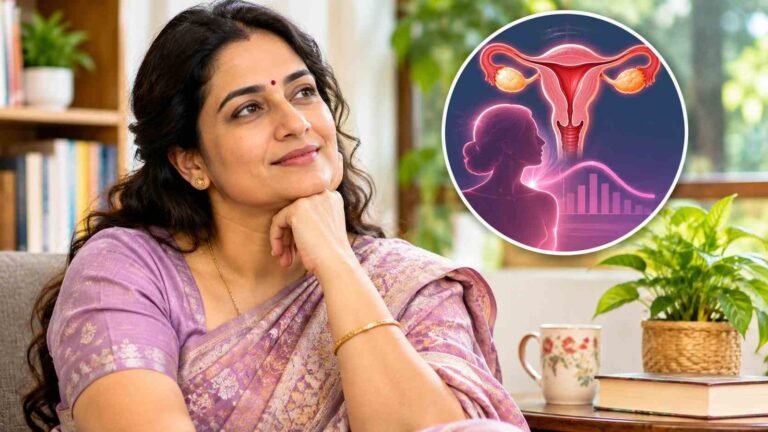
The link between hormones and female desire means understanding how the body’s chemical messengers, such as oestrogen, progesterone, testosterone, thyroid and prolactin, affect libido, arousal, lubrication, mood and energy. But it is important to remember that a woman’s desire depends not only on hormones, but equally on the mind, relationship, fatigue and surroundings.
In this article we will look at the role of the main hormones, changes across life stages, when testing is needed, and how Ayurveda understands this balance.
Key Takeaways
- Changes in desire during the menstrual cycle are natural; many women feel more desire around ovulation.
- Thyroid, prolactin, anaemia and menopause are common medical causes of low desire.
- Hormone treatment only after testing and under a specialist’s supervision; beware of “hormone balance” advertisements.
- Ayurveda sees the Artava cycle, Rasa Dhatu, Dosha balance and a cheerful mind as the basis of a woman’s desire.
The Main Hormones and Their Roles
- Oestrogen: vaginal lubrication, skin softness, blood flow and mood. When it falls: dryness and pain.
- Progesterone: rises in the second half of the cycle; brings calm in some women, fatigue and low desire in others.
- Testosterone: present in women too, in small amounts; plays a role in desire and energy.
- Thyroid: when underactive: fatigue, weight gain, low mood, low desire, dryness.
- Prolactin: rises during breastfeeding; reduces desire and lubrication. If it rises without breastfeeding, testing is needed.
- Cortisol (stress hormone): rises with long-term stress and suppresses desire.
- Oxytocin: rises with touch, hugs and closeness; the feeling of “bonding” and trust.
Desire Through the Menstrual Cycle
- During periods: fatigue, pain; desire low, or normal in some.
- After periods (follicular phase): oestrogen rises, energy and mood improve.
- Around ovulation: many women feel the highest desire and arousal; discharge becomes thin and slippery.
- Before periods (luteal phase): progesterone rises; some women feel irritability, bloating, low desire (PMS).
Every woman’s experience is different. Keeping notes on your cycle for a month or two helps you understand your own pattern, and makes it easier to explain to your husband too.
Changes Across Life Stages
- Pregnancy: lower in the first trimester due to nausea and fatigue, higher in many women in the second, lower in the third due to physical discomfort.
- Childbirth and breastfeeding: low oestrogen, high prolactin; dryness and low desire are natural.
- Perimenopause (40 to 50): irregular periods, hot flashes, sleep problems, mood changes.
- After menopause: dryness, thinner tissue, possible pain during intercourse; but for many women, with no fear of pregnancy, intimacy can also become more relaxed.
Symptoms: When to Consider Hormone Tests?
- A long or sudden drop in desire.
- Along with it, extreme fatigue, weight change, hair fall, feeling cold.
- Irregular, very heavy or absent periods.
- Milky discharge from the breasts without breastfeeding.
- Hot flashes, night sweats, sleep problems.
- Vaginal dryness and pain during intercourse.
Causes
Modern View
- Underactive thyroid (hypothyroidism).
- Raised prolactin (some medicines or a pituitary cause).
- PCOS, perimenopause, menopause.
- Anaemia, vitamin D and B12 deficiency.
- Some hormonal pills, mood medicines (do not stop them on your own).
- Ovarian surgery or early menopause.
- Long-term stress and poor sleep.
Ayurvedic View
Ayurveda does not use the word hormone, but describes a woman’s cycle and desire through Artava (menstrual and reproductive essence), Rasa Dhatu and the Doshas. The classics say that during Ritukala (the time around ovulation), a woman naturally feels more cheerfulness, attraction and desire, which matches beautifully with the modern science of ovulation. When Vata increases: dryness, anxiety, irregular cycles; when Pitta increases: hot flashes, irritability, heavy bleeding; when Kapha increases: heaviness, lethargy, low desire. Ayurveda calls menopause Rajonivritti and considers it a Vata-dominant period.
Ayurvedic Understanding
Ayurvedic care focuses not on “raising hormones” but on restoring the body’s own balance. It includes nourishing Rasa and Rakta, improving Agni, diet and routine according to Dosha, Rajaswala Paricharya (rest and light food during periods) and Rasayana suited to each life stage. Herbs like Shatavari are described in the classics as beneficial for women at every stage.
Psychological Understanding
Hormonal changes affect mood, and mood affects desire. But the reverse is also true: stress, sadness and distance in the relationship affect hormones. Many women believe “my hormones are bad” and leave everything to that, when in fact fatigue, sleep and the relationship also need work. Looking at body and mind together is more useful. For example, thyroid treatment may bring back the body’s energy, but if there are years of anger in the relationship, conversation and time are also needed for desire to fully return.
Which Tests Are Needed?
- Thyroid (TSH), prolactin, haemoglobin, ferritin, vitamin D and B12, sugar.
- If periods are irregular: FSH, LH (on specific days of the cycle), PCOS-related tests.
- In perimenopause and menopause, symptoms matter most; hormone reports often fluctuate.
- Pelvic ultrasound if needed.
There is no need to get every test done under the name of a “hormone panel”; the doctor suggests the right tests based on symptoms.
Treatment / Management
- Treat the root cause: thyroid, anaemia, prolactin.
- Lifestyle: sleep, exercise, nutrition, stress control.
- Dryness: lubricant, moisturiser, local treatment if needed.
- Couple communication and counselling.
- Ayurveda: care according to life stage and Prakriti.
Modern Treatment, Explained
Depending on the cause, the doctor considers thyroid hormone replacement, a dopamine agonist class medicine to lower prolactin, iron for anaemia, hormone replacement therapy (HRT) for severe menopausal symptoms, or local oestrogen for vaginal dryness alone. The benefits and risks of HRT differ for every woman (breast cancer, blood clots, heart history), so the decision is made only after detailed discussion with a specialist. Do not take online “hormone balance” pills or creams on your own.
Common Myths
- “Low desire means bad hormones.” Often fatigue, stress or the relationship is the main cause.
- “Menopause means the end of sexual life.” With the right care, many women enjoy satisfying intimacy.
- “Eating soya or flax will change hormones immediately.” Diet helps, but it is not a miracle.
- “Normal hormone tests mean the problem is imaginary.” Desire has many non-hormonal causes.
Cycle Diary: A Tool to Understand Yourself
For two or three months, note three things daily in a small diary or mobile app: the day of your cycle, mood and energy (1 to 5), and desire for intimacy (1 to 5). Add sleep and stress too. Soon your own pattern will start to show: when energy is higher, when you need rest. This information is useful for the doctor, and also helps explain your needs to your husband. Many women say this diary made them feel for the first time that their mood changes are not “without reason.”
The Husband’s Role
When a wife’s mood and desire change during her cycle, pregnancy or menopause, the husband should be patient and understanding. If there is irritability before periods, do not criticise; a hot water bottle, a little rest and help with housework are more useful. If dryness causes pain during menopause, no haste, and support in treatment. Accepting the changes in your wife’s body is a mature form of love.
Ayurvedic Herbs
Dosage and choice should be decided by a Vaidya after examination. Special caution in pregnancy, breastfeeding and hormone-sensitive conditions.
- Shatavari: Rasayana for women, for dryness and menopause.
- Ashoka, Lodhra: Artava balance.
- Ashwagandha: stress, sleep, strength.
- Brahmi, Jatamansi: mood and sleep.
- Amla, Giloy: Rasayana, Pitta pacification.
- Kanchanar Guggulu: as support in thyroid gland conditions (along with the doctor’s treatment, on a Vaidya’s advice).
Diet
- Iron, protein, calcium: green vegetables, lentils, milk, sesame, ragi.
- Good fats: ghee in moderation, walnuts, flaxseed.
- Phytoestrogen-rich foods in moderation: flaxseed, sesame, chickpeas.
- During periods, light, warm, easily digestible food.
- Reduce: sugar, refined flour, too much caffeine, alcohol.
Lifestyle
- 7 to 8 hours of sleep; regular timing.
- 30 to 45 minutes of exercise daily; strength exercise after 40 (for bones).
- Sunlight; vitamin D.
- Stress control: meditation, hobbies, friends.
- Keep notes on your cycle.
Panchakarma
According to Prakriti and life stage, a Vaidya may suggest Abhyanga (oil massage), Shirodhara (for sleep and mood in menopause), Basti (medicated enema, Vata pacification) or Virechana (Pitta pacification). Not mandatory for everyone.
Yoga and Pranayama
- Baddha Konasana, Supta Baddha Konasana, Viparita Karani, Setu Bandhasana.
- Sheetali (for hot flashes), Anulom-Vilom, Bhramari.
- Yoga Nidra: sleep and stress.
Precautions
- Do not take advertised “hormone balance” pills or creams on your own.
- Any bleeding after menopause: see a doctor immediately.
- Do not stop thyroid or other ongoing medicines without your doctor’s advice.
- Even Ayurvedic herbs only on advice in hormone-sensitive conditions.
- Results differ from woman to woman.
This article is for general information. Hormone-related symptoms look similar in many conditions, so instead of self-diagnosis or taking hormone medicines on your own, consult a qualified gynaecologist, endocrinologist or Vaidya.
References
- Sushruta Samhita, Sharira Sthana 3 (Ritukala, Artava).
- Charaka Samhita, Sharira Sthana 8 (care of the menstruating woman).
- Ashtanga Hridaya, Sharira Sthana 1 (Artava, signs of Ritukala).
Do’s and Don’ts
Do: understand your cycle, get tests based on symptoms, sleep, nutrition and exercise, talk with your husband, take expert advice.
Don’t: treat every change as a disease, take advertised hormone products, stop medicines on your own, blame yourself.
Counselling
Stages of hormonal change, especially after childbirth and around menopause, are emotionally challenging. Individual and couple counselling work on accepting these changes and maintaining intimacy. Everything you share is kept completely confidential.
Case Studies
Case 1: Thyroid
A woman in her thirties had constant fatigue, weight gain, hair fall and complete disinterest in intimacy for a year. She believed it was “work tiredness.” Tests showed an underactive thyroid. The doctor’s treatment began, along with diet, exercise and supportive Ayurvedic care under a Vaidya’s supervision. In three to four months, her energy, mood and desire slowly returned. Her husband said that earlier he believed his wife had lost interest, but now he understood it was a signal from her body. Now both get an annual health check-up together, and she takes her thyroid medicine regularly as her doctor advises.
Case 2: Perimenopause
A woman in her late forties began having hot flashes, sleep problems, irritability and pain during intercourse. She felt “my sexual life is over now.” The gynaecologist suggested local treatment for dryness, and the Vaidya provided care with Shatavari, Abhyanga, Sheetali Pranayama and a Pitta-pacifying diet. In couple counselling, her husband also learned about this stage. Within a few months her sleep improved and intimacy became comfortable again.
Case 3: Prolactin
A woman around thirty had irregular periods, slight discharge from the breasts and low desire, while she was not breastfeeding. Tests showed raised prolactin, and she had been taking a medicine for acidity for a long time, which could have been a side effect. The doctor reviewed the medicine and gave the necessary treatment; Ayurvedic Artava balancing care was supportive. Within a few months both her cycle and desire improved. She understood how important it is to ask the doctor about side effects when taking any medicine for a long time.
When to See a Doctor / Sexologist
- A long drop in desire along with fatigue, weight change, hair fall.
- Periods absent for more than three months (other than pregnancy) or very irregular.
- Breast discharge without breastfeeding.
- Bleeding after menopause.
- Severe hot flashes, sleep and mood problems.
- Pain during intercourse.
About Dr. Nikul Patel
Dr. Nikul Patel (BAMS) is an Ayurvedic physician at LifeCare Ayurveda and has been practising since 1999, that is, for 27 years. For hormone-related changes and questions about female desire, he offers understanding of symptoms, coordination with a gynaecologist or endocrinologist when needed, Artava-Rasa based Ayurvedic care and confidential couple counselling.
FAQs
Is it normal for desire to change during the cycle?
Yes, many women feel more desire around ovulation and less before periods.
Can thyroid problems reduce desire?
Yes, an underactive thyroid can cause fatigue, low mood and low desire.
Is intimacy possible after menopause?
Yes, with treatment of dryness and understanding, many women enjoy satisfying intimacy.
Is HRT safe for everyone?
No, benefits and risks differ for each woman; discussion with a specialist is necessary.
Does Shatavari increase hormones?
The classics describe it as a Rasayana for women; caution is needed in some conditions, so take it on a Vaidya’s advice.
People Also Ask
Why does desire increase around ovulation?
Because oestrogen and a little testosterone rise; Ayurveda also describes this during Ritukala.
Why is desire low during PMS?
Because of rising progesterone, bloating and mood changes.
Can the contraceptive pill reduce desire?
Possible in some women; discuss alternatives with your doctor, do not stop on your own.
Conclusion
Hormones influence a woman’s desire, but do not fully decide it. Understanding your cycle and life stage, the necessary tests, treating the root cause, lifestyle, Ayurvedic Artava-Rasa balance and open conversation with your husband together lead a woman towards healthy and satisfying intimacy at every age. Results may differ from woman to woman.
Dr. Nikul Patel (B.A.M.S.)
307, 3rd Floor, Shalin Complex, Above Farki Lassi, Krishnabag Char Rasta, Maninagar, Ahmedabad – 380008
Timing: 10:00 AM to 1:00 PM and 3:00 PM to 6:30 PM | Saturday–Sunday: Closed
📍 Clinic Location — Google Maps
