
🌐 Read this article in other languages:
हिंदी: डिप्रेशन, तनाव और कामेच्छा: मन उदास हो तो इच्छा क्यों घटती है और आयुर्वेदिक मन-शरीर देखभाल
When the mind feels heavy, sleep does not come and nothing feels interesting, even the thought of intimacy seems far away. Many men and women come to the clinic with reduced sexual desire, and in conversation it turns out that for months they have been living with sadness, hopelessness or constant stress. They look for treatment of a sexual problem, while the root issue lies in the mind.
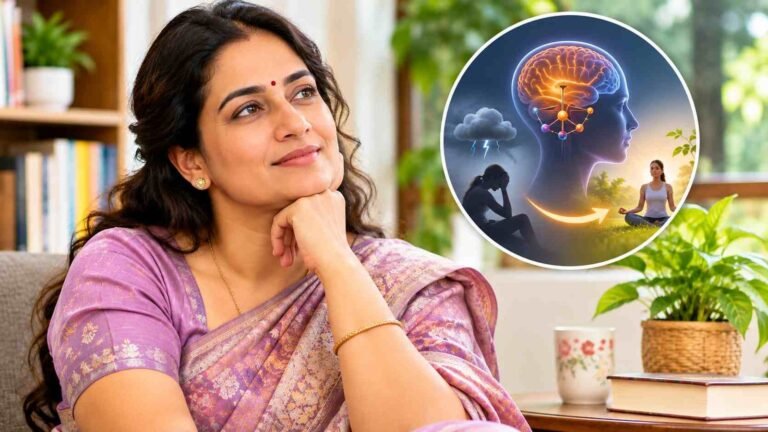
There is a direct link between depression and libido. Depression means continuous sadness for more than two weeks, loss of interest and pleasure, fatigue, changes in sleep and appetite, and an effect on daily life. One common symptom is reduced sexual desire. Stress, even when it does not reach the level of depression, also suppresses desire. Please note that this article is not for diagnosis; diagnosis should be made only by a qualified specialist.
In this article we will understand how the mind and desire are connected, what role mood medicines play, how married life is affected, and how Ayurveda cares for the mind.
Key Takeaways
- Sadness and stress affect brain chemicals linked with “pleasure” and “desire.”
- Low desire is often the first visible sign of a problem in the mind.
- Some mood medicines can affect desire; but stopping medicine on your own is risky, and the doctor can consider alternatives.
- Ayurveda cares for mind and body through Sattva (mental stability), Ojas and Medhya Rasayana.
How Are the Mind and Desire Connected?
Desire begins not just in the body but in the brain. Dopamine (motivation and pleasure), serotonin (mood), oxytocin (closeness) and the stress hormone cortisol: when all of these are in balance, desire awakens naturally. In depression, the experience of pleasure falls (anhedonia), so things that were once enjoyable, including intimacy, now feel like a “burden.” Under long-term stress the body stays in “survival mode,” and functions like reproductive desire are pushed to the back.
Symptoms
Symptoms of the Mind (more than two weeks)
- Persistent sadness, emptiness, hopelessness.
- No interest in activities once enjoyed.
- Too little or too much sleep; change in appetite.
- Fatigue, poor concentration, difficulty making decisions.
- Feeling worthless or guilty.
- Thoughts of self-harm: immediate help needed.
Sexual Symptoms
- Desire reduced or completely gone.
- Erection difficulty in men; less arousal and lubrication in women.
- Delayed or absent orgasm.
- Avoiding intimacy, emotional distance from the partner.
Causes
Modern View
- Depression and anxiety.
- Long-term stress: job, financial burden, family issues, illness, grief.
- Lack of sleep.
- Side effects of mood medicines: especially some SSRI class antidepressants.
- Alcohol or other addictions: often used to “forget” sadness, which worsens both.
- Postnatal low mood.
- Thyroid, anaemia, vitamin deficiency: affect both mood and desire.
- Conflict in the relationship: both a cause and a result.
Ayurvedic View
Ayurveda describes three qualities of the mind: Sattva (clarity, calm, joy), Rajas (restlessness, worry, craving) and Tamas (inertia, lethargy, darkness). In conditions like depression, Tamas and Kapha increase (heaviness, no interest, excess sleep), while in anxiety and stress Rajas and Vata rise (restlessness, no sleep). Charaka Samhita counts Vishada (despondency) among the greatest factors that aggravate disease, and says nothing gives strength like Harsha (cheerfulness). Grief, fear and worry deplete Ojas, which is the basis of both desire and vitality.
Ayurvedic Understanding
Ayurvedic care works at three levels: Sattvavajaya (guiding the mind in the right direction: counselling, positive thinking, good company), Daivavyapashraya (spiritual support like prayer, mantra and meditation, according to the person’s faith), and Yuktivyapashraya (medicine, diet, Panchakarma). Medhya Rasayana, herbs that strengthen the mind and intellect, are considered especially useful here. Ayurvedic care can support modern mental health treatment, not replace it, especially in severe depression.
Psychological Understanding
In depression a person often blames themselves: “I am not a good husband or wife,” “There is nothing left in me.” If the partner sees low desire as “rejection,” guilt grows further. To break this cycle, both need to understand that reduced desire is a symptom of illness, not a lack of love. Just as appetite goes during a fever, desire drops when the mind is unwell.
Mood Medicines and Sexual Health
Some medicines for depression, especially of the SSRI class, can cause side effects in some people such as lower desire, delayed orgasm or erection difficulty. Many patients stop the medicine on their own out of embarrassment, which can bring the sadness back and sometimes cause withdrawal symptoms. The right path is an open conversation with the doctor. The doctor can consider options like changing the dose, changing the timing, switching to another class with fewer sexual side effects, or adding therapy.
Intimacy Under Stress: Small Steps
- Lower expectations: for a few weeks, do not make intercourse the goal; just time together, touch and conversation.
- The power of touch: a daily 20-second hug raises oxytocin and lowers stress.
- Walk together: 20 minutes in the evening without phones.
- Gratitude: each day, tell each other one good thing about the other.
- Right timing: intimacy on a relaxed day instead of a tired night.
These steps are not a substitute for treatment, but they bring lightness to both mind and relationship.
Which Tests Are Needed?
- Assessment by a mental health specialist.
- Thyroid, haemoglobin, vitamin D and B12, sugar.
- Testosterone in men when needed.
- Review of current medicines.
- History of sleep and substance use.
Treatment / Management
- Treat the mind first: help from a psychiatrist or psychologist; counselling and therapy such as CBT.
- Medicine review: talk to the doctor about any sexual side effects.
- Treat physical causes: thyroid, anaemia.
- Lifestyle: sleep, exercise, sunlight, social connection.
- Couple counselling.
- Ayurveda: Medhya Rasayana, Ojas-building care, daily routine.
Modern Treatment, Explained
The psychiatrist prescribes antidepressant class medicines as needed, and if there are sexual side effects, considers changing the class or dose. For anxiety, anxiolytic class treatment may be used for a short time. CBT (therapy to change thoughts and behaviour), mindfulness based therapy and couple therapy are very effective. If erection difficulty continues in men, the doctor can consider separate treatment for it. Any medicine only on a specialist’s advice.
Common Myths
- “Depression means a weak mind.” It is a treatable condition of the brain and body.
- “Mood medicines always cause permanent sexual problems.” There are many options; talk to your doctor.
- “Low desire means love is gone.” Often it is a symptom of illness.
- “Alcohol reduces stress and lifts the mood.” In the long run, both sadness and sexual problems increase.
The Partner’s Role
Living with a low partner can be heavy too, and your own feelings are natural. Still, criticism, pressure or advice like “just be happy” does not help. Patience, listening, help with small tasks, going for walks together, encouraging a visit to the doctor, and non-sexual touch (holding hands, hugging) all make a big difference. Take care of yourself as well; you can also seek counselling if needed.
Ayurvedic Herbs
Dosage and choice should be decided by a Vaidya after examination. If you take a mood medicine, inform both the doctor and the Vaidya.
- Brahmi: the best Medhya Rasayana, calms the mind.
- Shankhpushpi, Jyotishmati: Medhya.
- Ashwagandha: reduces stress, strengthening, improves sleep.
- Jatamansi, Tagara: sleep and restlessness.
- Giloy (Guduchi): Medhya and Rasayana.
- Kaunch seed: enthusiasm and Vajikarana, on a Vaidya’s advice.
Diet
- Timely, warm, fresh, Sattvic meals.
- Milk, ghee in moderation, almonds, walnuts, dates: Ojas-building.
- Whole grains, lentils, green vegetables, fruits.
- Omega-3: walnuts, flaxseed.
- Reduce: excess sugar, junk food, too much caffeine, alcohol.
Lifestyle
- A 20 to 30 minute walk in morning sunlight daily; very effective for mood.
- Regular sleeping and waking times.
- Small, easy goals; note each one as it is completed.
- Stay connected with friends and family; avoid isolation.
- Less screen time, especially at night.
- A little time for a hobby every day, even 15 minutes.
Panchakarma
A Vaidya may suggest Shirodhara (oil stream on the forehead), Shiro Abhyanga (head massage), Nasya (nasal oil therapy), Abhyanga (full body oil massage) or Basti (medicated enema). In conditions of the mind, these therapies help bring calm and sleep. Not mandatory for everyone.
Yoga and Pranayama
- Surya Namaskar: energy and mood.
- Bhujangasana, Ustrasana, Setu Bandhasana: chest-opening poses.
- Bhramari, Anulom-Vilom, Ujjayi.
- Yoga Nidra and 10 to 15 minutes of meditation daily.
Precautions
- Thoughts of self-harm or ending your life: contact someone close, a doctor or a helpline immediately.
- Never stop a mood medicine without your doctor’s advice.
- Before taking Ayurvedic herbs with a mood medicine, inform both specialists.
- Do not self-treat with alcohol or sleeping pills.
- Results differ from person to person.
This article is for general educational information and does not diagnose any mental condition. If you or a loved one feel continuous sadness or hopelessness, seek help from a qualified psychiatrist or psychologist. Asking for help is a sign of courage.
References
- Charaka Samhita, Sutra Sthana 25 (Vishada aggravates disease, Harsha gives strength) and 11 (three types of therapy).
- Charaka Samhita, Chikitsa Sthana 1 (Medhya Rasayana).
- Charaka Samhita, Sutra Sthana 17 (causes of Ojas depletion).
Do’s and Don’ts
Do: seek help for the mind, talk to your doctor about medicine side effects, sunlight, walking and sleep, communicate with your partner.
Don’t: stop medicine on your own, look for relief in alcohol, treat low desire as lack of love, suffer alone.
Counselling
In depression and stress, both individual counselling and couple therapy are very important. They work on thought patterns, stress management, communication and slowly bringing intimacy back. Everything you share is kept completely confidential.
Case Studies
Case 1: After Losing a Job
A man in his forties began staying at home for months after losing his job. His sleep worsened, conversation reduced, and intimacy with his wife stopped completely. He came for a “strength medicine,” but conversation revealed signs of deep sadness. He was referred to a psychiatrist, where treatment and counselling began. Along with this came morning walks, a regular routine and Brahmi-Ashwagandha based support under a Vaidya’s supervision. In a few months his mood improved, he started new work, and desire slowly returned. He said the “strength” was missing not in his body but in his mind. His wife also admitted that at first she felt her husband was drifting away from her, but after understanding she began to support him instead of criticising, which helped the treatment greatly.
Case 2: A Medicine Side Effect
A woman in her thirties was taking medicine for anxiety and sadness. Her mood improved, but orgasm almost stopped, and she was thinking of quitting the medicine. She was counselled and helped to talk to her psychiatrist, who changed the class of medicine. Along with CBT, yoga and Medhya Ayurvedic support, her mood stayed stable and the sexual side effect reduced. She said she felt very embarrassed telling the doctor about this, but the doctor accepted it as a normal and important matter, which gave her relief.
Case 3: After Grief
A couple in their fifties felt distant from each other after the death of a close relative. Both felt intimacy was “wrong.” In grief counselling they expressed their feelings and understood that each other’s support was their greatest strength at this time. Slowly, emotional and then physical closeness returned. They said that in times of sorrow, even holding each other’s hand became a great support.
When to See a Doctor / Sexologist
- Continuous sadness or loss of interest for more than two weeks.
- Thoughts of self-harm or ending your life: seek help immediately.
- Sexual side effects after starting a mood medicine.
- Stress seriously affecting sleep, work or relationship.
- Increasing alcohol or other substance use.
About Dr. Nikul Patel
Dr. Nikul Patel (BAMS) is an Ayurvedic physician at LifeCare Ayurveda and has been practising since 1999, that is, for 27 years. For sexual problems linked with stress and low mood, he offers coordination with a psychiatrist, Medhya Rasayana and Ojas based supportive Ayurvedic care, and confidential couple counselling, guiding care of both mind and relationship.
FAQs
Does depression reduce desire?
Yes, reduced desire is a common symptom of depression.
Can mood medicines cause sexual problems?
Some can; the doctor can consider options like changing the dose or class.
Can I stop the medicine on my own?
No, sadness may return and withdrawal symptoms may occur.
Is Brahmi useful for mood?
In Ayurveda it is considered the best Medhya Rasayana; consult a specialist before taking it with a mood medicine.
How can the partner help?
Through patience, listening, support without pressure and encouraging a visit to a specialist.
People Also Ask
Can stress cause ED?
Yes, long-term stress and anxiety can affect erections.
Does exercise improve mood?
Yes, regular exercise helps mood, sleep and desire.
Does desire come back after depression?
In most people, desire slowly returns as mood improves.
Conclusion
Sadness and stress suppress desire in both mind and body. Seeing low desire as a signal from the mind rather than a lack of love, getting proper mental health treatment, speaking openly about medicine side effects, Ayurvedic Medhya and Ojas care, and a partner’s patient support can help both mind and intimacy bloom again. Results may differ from person to person.
Dr. Nikul Patel (B.A.M.S.)
307, 3rd Floor, Shalin Complex, Above Farki Lassi, Krishnabag Char Rasta, Maninagar, Ahmedabad – 380008
Timing: 10:00 AM to 1:00 PM and 3:00 PM to 6:30 PM | Saturday–Sunday: Closed
📍 Clinic Location — Google Maps
